How Do AI to Human Text Tools Work?
The Technology Behind Humanization
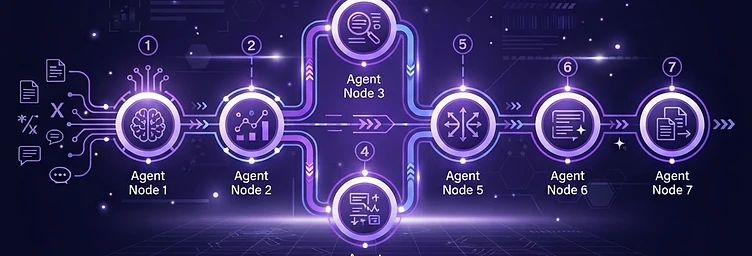
AI-to-human text tools have evolved far beyond simple paraphrasing. Modern humanization platforms use sophisticated multi-agent systems, natural language processing, and voice-matching technology to transform robotic AI output into writing that reads as authentically human. Here's how they work.
Step 1: AI Pattern Detection
The first stage of any serious humanization tool is analysis. A detection agent scans the input text for the statistical signatures of AI writing:
- Perplexity analysis: Identifies sections where word choices are too predictable.
- Burstiness measurement: Flags uniform sentence lengths and structures.
- Vocabulary scanning: Detects overused AI phrases like "delve," "tapestry," and "in conclusion."
- Structural analysis: Identifies formulaic paragraph structures and transition patterns.
This analysis creates a map of what needs to be fixed, rather than blindly rewriting the entire text.
Step 2: Multi-Agent Orchestration
The most advanced humanization tools don't rely on a single AI pass. Instead, they deploy multiple specialized agents, each focused on one dimension of writing quality:
- Sentence Diversity Agent: Rewrites for varied length and structure.
- Voice Preservation Agent: Ensures the original meaning and tone are maintained.
- Emotional Intelligence Agent: Adds warmth, empathy, or authority where the text is flat.
- Fact Verification Agent: Confirms that statistics, quotes, and technical details remain accurate.
- Readability Agent: Adjusts complexity for the target reading level.
- Consistency Agent: Ensures tone and style remain uniform throughout.
An orchestrator decides which agents to deploy, in what order, and how many refinement cycles are needed based on the content type and quality tier selected.
Step 3: Voice Matching and Writing DNA
A key differentiator of advanced humanization tools is the ability to match a specific author's voice. This is typically achieved through Writing DNA profiles:
- Sample analysis: The user provides samples of their previous writing.
- Trait extraction: The system analyzes the samples for patterns in vocabulary, sentence structure, rhythm, tone, and stylistic preferences.
- Profile creation: These traits are stored as a profile that can be applied to future content.
- Voice application: When humanizing new text, the system adjusts the output to match the stored voice profile.
This means that humanized content doesn't just sound human — it sounds like you.
Step 4: Quality Scoring and Reporting
After humanization, the system evaluates the output against multiple quality dimensions:
- Naturalness: How closely the text resembles human writing.
- Authenticity: Whether the text conveys genuine voice and perspective.
- AI detection score: The likelihood that detectors will flag the text as AI-generated.
- Sentence diversity: The variety in sentence length and structure.
- Emotional intelligence: The presence of appropriate emotional depth.
- Voice match: How closely the output matches the target writing voice.
- Readability: How accessible the text is for the intended audience.
- Grammar and mechanics: Technical correctness.
- Consistency: Uniformity of tone and style throughout.
These scores are compiled into a humanity report that gives writers transparency into what was improved and where.
Step 5: Iterative Refinement
Quality humanization isn't a single pass. Advanced tools use iterative refinement — the output is analyzed, scored, and if it doesn't meet the quality threshold, specific agents are redeployed to address remaining issues. This cycle continues until the content meets the target quality level or reaches the maximum number of refinement cycles.
Writing Modes and Specialization
Humanization tools typically support multiple writing modes, each with different priorities:
- Business: Professional, clear, and concise.
- Academic: Formal, rigorous, and well-structured.
- Creative: Expressive, varied, and emotionally rich.
- Casual: Conversational, relatable, and informal.
- Technical: Precise, detailed, and authoritative.
The mode selected determines which agents are prioritized and how the quality thresholds are set.
The Role of Human Oversight
Even the most advanced humanization tools work best with human oversight. The ideal workflow is collaborative: AI handles the heavy lifting of pattern analysis, structural refinement, and voice matching, while the human writer reviews, adjusts, and approves the final output. This partnership produces content that is both efficient to create and genuinely high in quality.
Conclusion
AI-to-human text tools work through a sophisticated pipeline: pattern detection, multi-agent orchestration, voice matching, quality scoring, and iterative refinement. By understanding this process, writers can choose the right tool, configure it effectively, and produce content that combines the efficiency of AI with the authenticity that only human-quality writing can deliver.